
Description
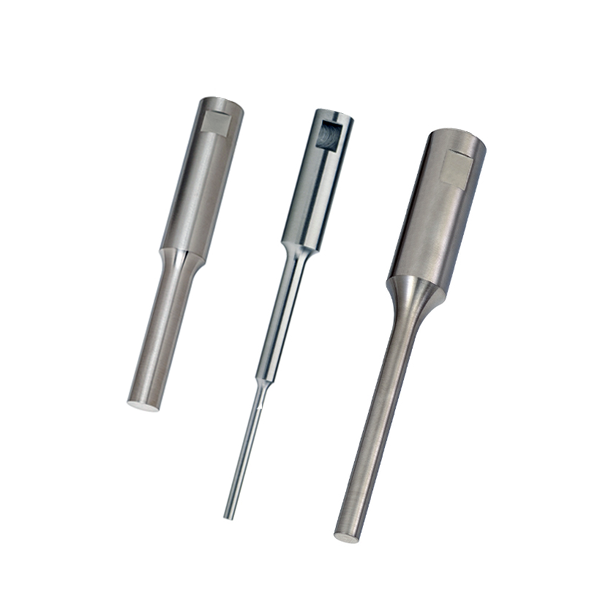
Horns (also known as probes) are made from titanium and machined to specific sizes and shapes. When driven at their resonant frequency, they expand and contract longitudinally. This mechanical vibration is amplified and transmitted down the length of the probe. In liquid, the probe causes cavitation which constitutes the main mechanism for sample processing.
Choosing the appropriate horn is extremely important. The sample volume to be processed is directly related to the tip diameter. Smaller tip diameters(Microtip probes) deliver high intensity sonication, but the energy is focused within a small, concentrated area. Larger tip diameters can process larger volumes, but offer lower intensity.
These probes allow users to adapt their probe sonicator systems for different sample volumes, viscosities, and applications. By selecting the appropriate probe size, users can achieve optimal energy transfer and efficient sonication, ensuring consistent and reliable results across a wide range of laboratory processes.
Probe sonicators rely on ultrasonic energy transmitted through a probe immersed directly into a liquid sample. The probe vibrates at high frequencies, creating cavitation in the liquid. Cavitation involves the rapid formation and collapse of microscopic bubbles, which generates localized pressure and temperature changes. This process effectively breaks down particles, disrupts cells, and disperses materials.
Medium-sized probes are suitable for general laboratory applications involving moderate sample volumes. They provide a balance between power and precision, making them ideal for routine homogenization, emulsification, and dispersion tasks.
They deliver greater ultrasonic energy over a wider area, making them suitable for bulk processing and industrial applications. Their ability to handle higher power levels ensures efficient processing of larger sample volumes.
This ensures long-lasting performance even under continuous operation.
Various size probes provide flexibility for laboratories that work with different types of samples.
These probes are suitable for a wide range of applications in biological, chemical, and industrial laboratories. Industrial laboratories use them for product development and quality control processes.
Maintenance and care are important for ensuring the long-term performance of probe sonicator probes. Proper cleaning helps prevent contamination between samples and maintains the efficiency of ultrasonic energy transfer.
A properly sized probe can deliver ultrasonic energy more effectively, reducing processing time and improving results.
This makes it convenient to adapt the sonicator for different applications without complicated procedures.
Their durable construction, efficient energy transfer, and compatibility with different sample volumes make them an essential accessory for ultrasonic processing.
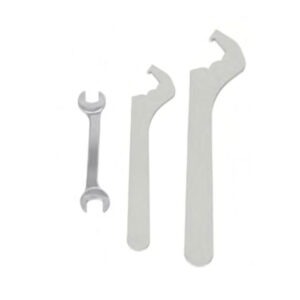
Spare/Additional Probes are supplied with a set of wrenches especially designed for easily removing & attaching the probes to the ultrasonic convertor.